Our platform is designed to facilitate informed decision-making, ensuring that health system executives and clinical leaders have access to reliable information. Trust in our processes is key to supporting clinical objectives in wound care.
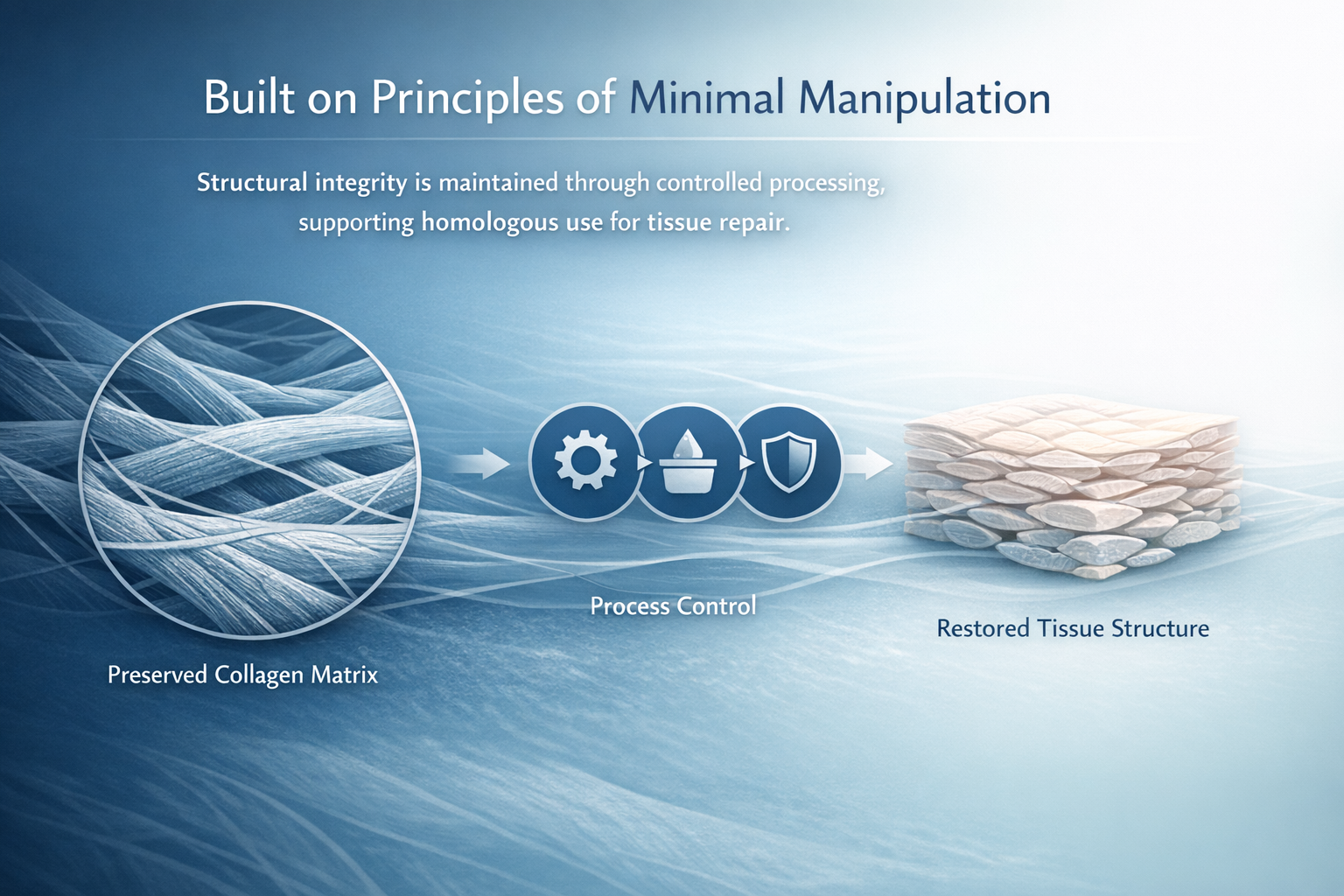
Structural integrity is maintained through controlled processing, supporting homologous use to supplement or replace native tissue.
Manufactured exclusively in an FDA-registered, AATB-accredited tissue establishment operating under Good Tissue Practices and Good Manufacturing Practices.
Produced in a controlled, accredited environment.
No. Differences in processing and intended use can impact whether a product aligns with structural tissue requirements. Products designed and processed as structural allografts are intended to support, cover, reinforce, or replace tissue in surgical applications.

Regulatory classification defines how a product is evaluated, used, and supported within the healthcare system. Clear alignment with Section 361 HCT/P helps reduce compliance ambiguity and supports confident adoption across surgical settings.
Yes. The product’s classification has been reviewed by the FDA Tissue Reference Group (TRG), confirming alignment with minimal manipulation and homologous use criteria under Section 361 HCT/P.
Structural allografts are processed to preserve the native extracellular matrix and are intended to provide physical support and protection in the surgical environment, consistent with their role in tissue repair and reconstruction.
Clear alignment with established regulatory frameworks—such as Section 361 HCT/P and TRG-reviewed classification—can streamline Value Analysis Committee (VAC) review by reducing uncertainty around compliance, intended use, and product category.
If you require additional information or have specific inquiries, please reach out. Our dedicated regulatory team is ready to assist you.